ABOUT SIMON
Simon Passmore is (besides a wonderful husband and father to our two kids) a freelance composer & pianist. He started experimenting with Logic Pro during COVID and before we knew it he was composing and programming for companies like the BBC and Sky History. His previous website (which I also made) needed an update, looking for an understated style that would make Simon’s work stand out.
Alongside writing original music for TV, film, and adverts, Simon works closely with virtual instrument developers Acoustic Samples and teaches at Chetham’s School of Music. Because his old site had been sitting behind a password screen while he was busy with projects, it needed a fresh start, both in how it looked and how Google saw it.
WHAT Simon NEEDED
The practical wish list for the new site was all about keeping things simple for the people hiring him:
Two clear sides to his work: Busy producers, directors, and lead composers needed to see straight away that he writes original scores and does specialist MIDI programming, without the site feeling cluttered.
Instant playback without leaving the page: Nobody wants to open ten different tabs or get bounced off to YouTube just to listen to a cue. Clicking a project needed to play the music or video right there on the spot.
A tidy grid for clashing shapes: His film and TV credits had vertical movie posters, while his MIDI demos were widescreen YouTube videos and Logic Pro screen recordings. Dropping standard widescreen thumbnails into the grid would have made everything look messy.
Everything easy to find on one main page: Rather than hiding his bio and reviews away on separate pages that half of visitors never click, he wanted a straightforward scrolling homepage with a clear way to get in touch.
A Google rescue: Because the old site had been password-protected for so long, Google had stopped showing information for his domain in search results.
The main challenge was fitting over 50 TV, film, and studio projects onto the site while keeping the whole thing feeling calm, understated, and simple enough for Simon to update himself whenever a new project comes out.
WHAT I CREATED
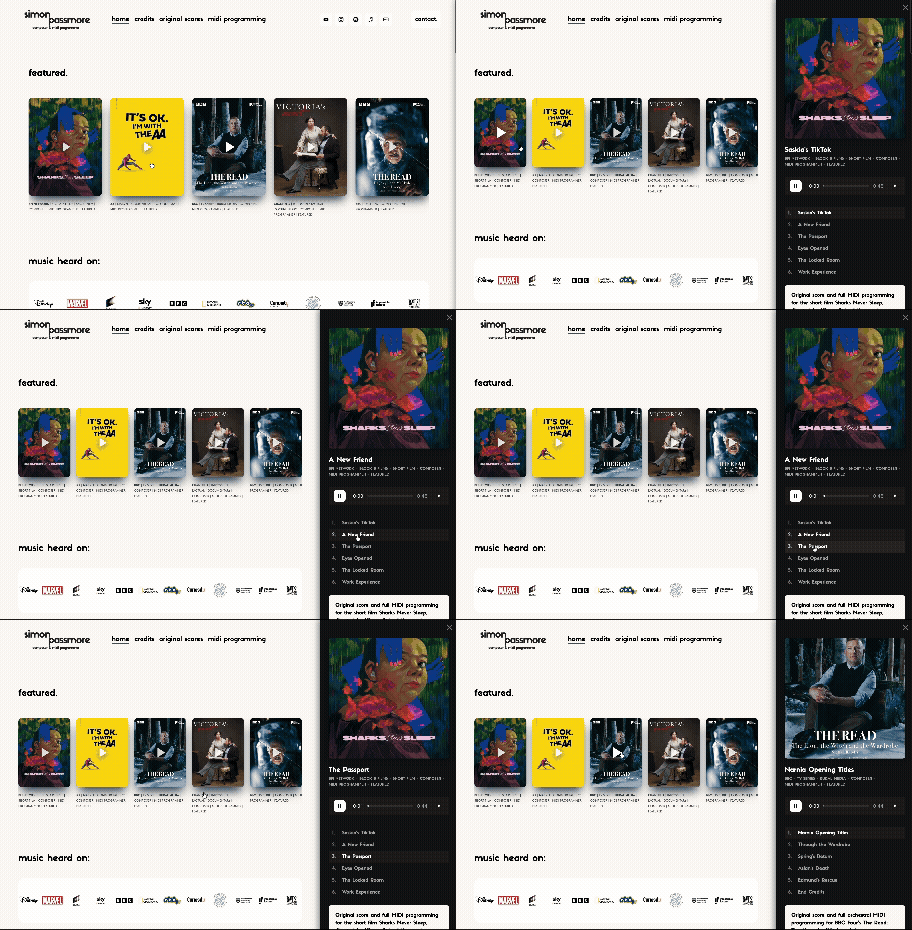
An Understated One-Page Layout Instead of spreading things thin across lots of separate pages, I brought everything onto one clean scrolling homepage. Visitors land straight on his featured credits and the channels his music has been heard on (including Disney, Marvel, BBC, National Geographic, Sky History, PBS, and RTÉ), followed by his original scores, MIDI programming demos, bio, Kind Words reviews, and a direct enquiry form at the bottom.
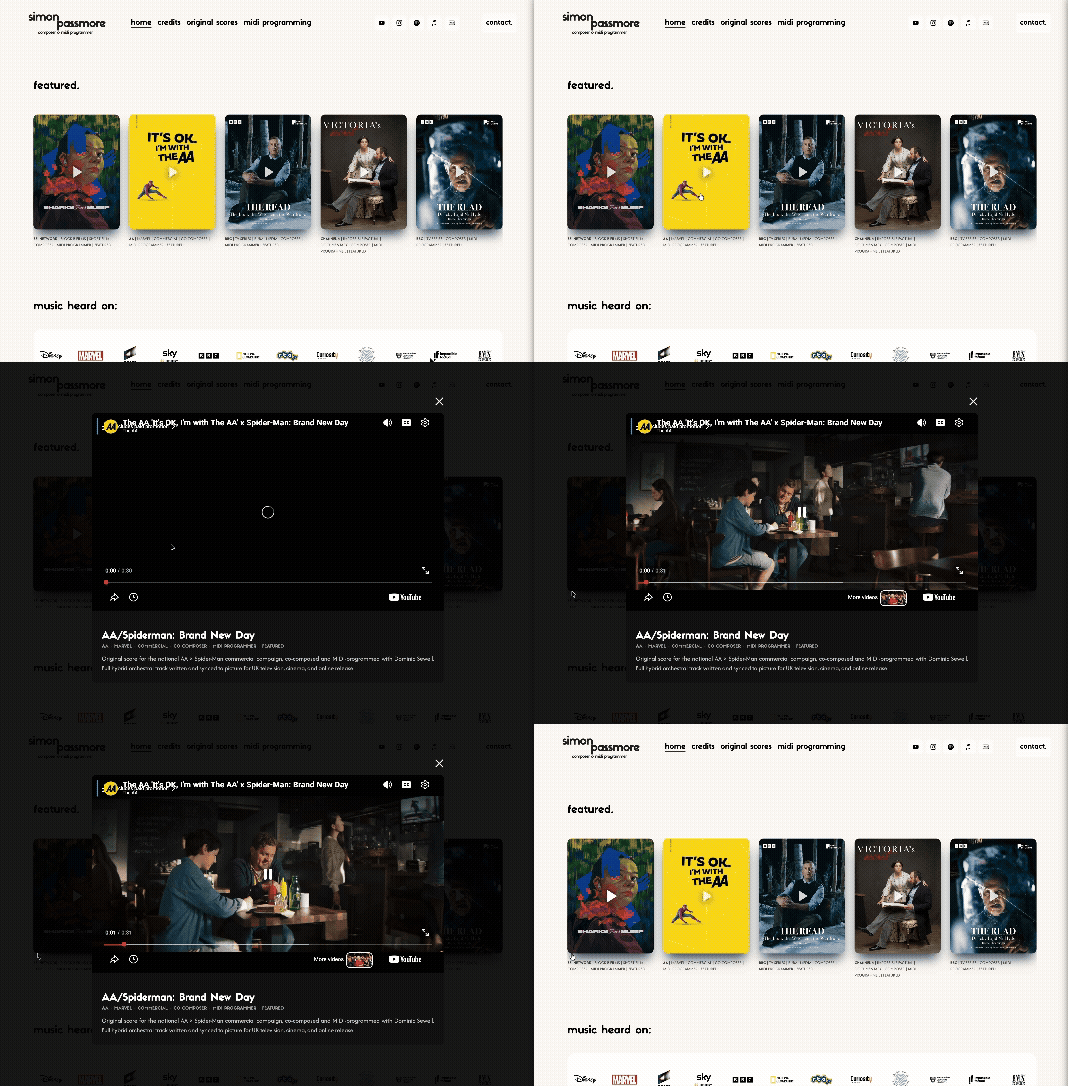
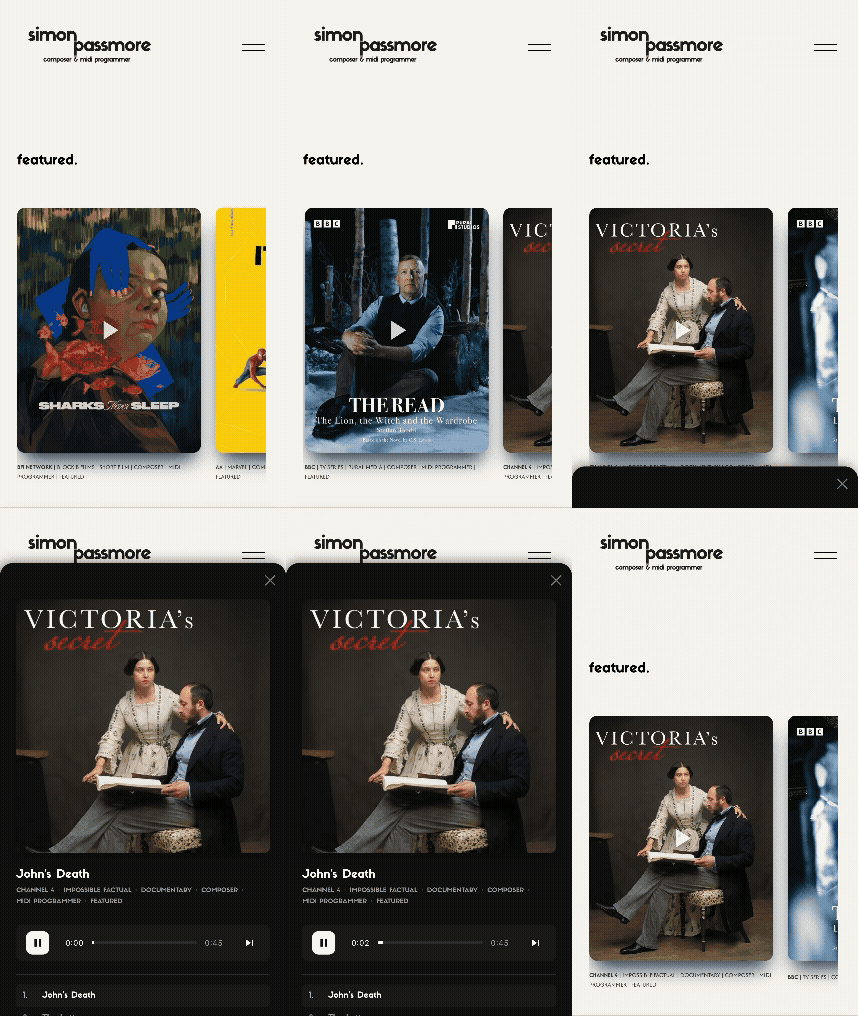
Custom Slide-Out Audio Player & Video Pop-Up Standard Squarespace audio blocks can get a bit clunky when you have dozens of cues to share. Behind the scenes, I added a custom slide-out music player so that clicking an audio project opens a neat sidebar with multi-track playlists. It gently pushes the page across rather than covering it up, meaning producers can keep listening to a score while scrolling down to read his bio or check other credits. Clicking a video project pauses the music automatically and opens the clip right there on screen, no bouncing off to YouTube.
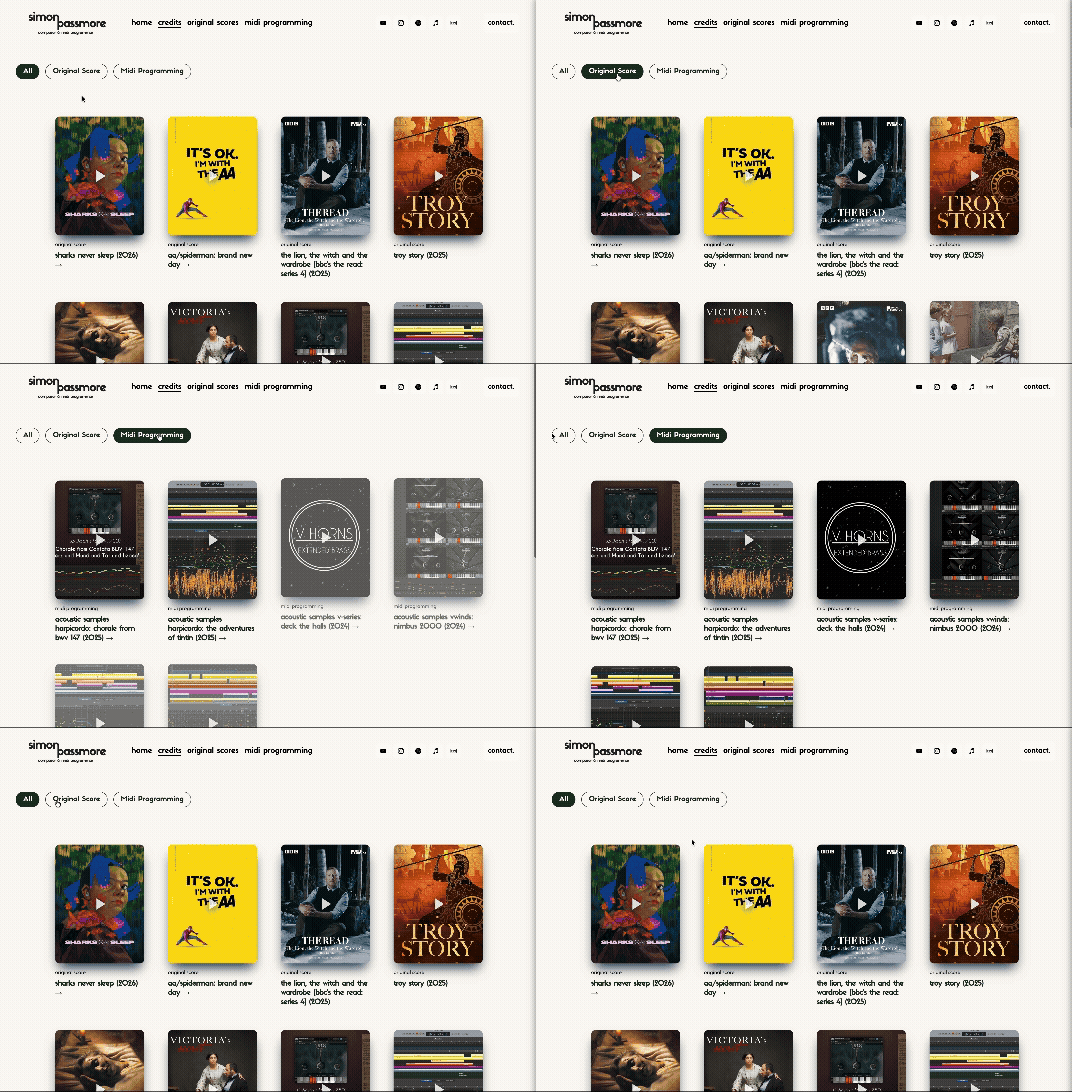
Unified Vertical Grid & Instant Filter Buttons To keep the visual layout calm, I designed custom Photoshop posters for his film work and cropped his widescreen Logic Pro piano rolls and virtual instrument demos to match the exact same vertical poster shape. On the full Credits page, I also added instant filter buttons (All, Original Score, MIDI Programming) so visitors can switch between the two sides of his work with zero page reloads.
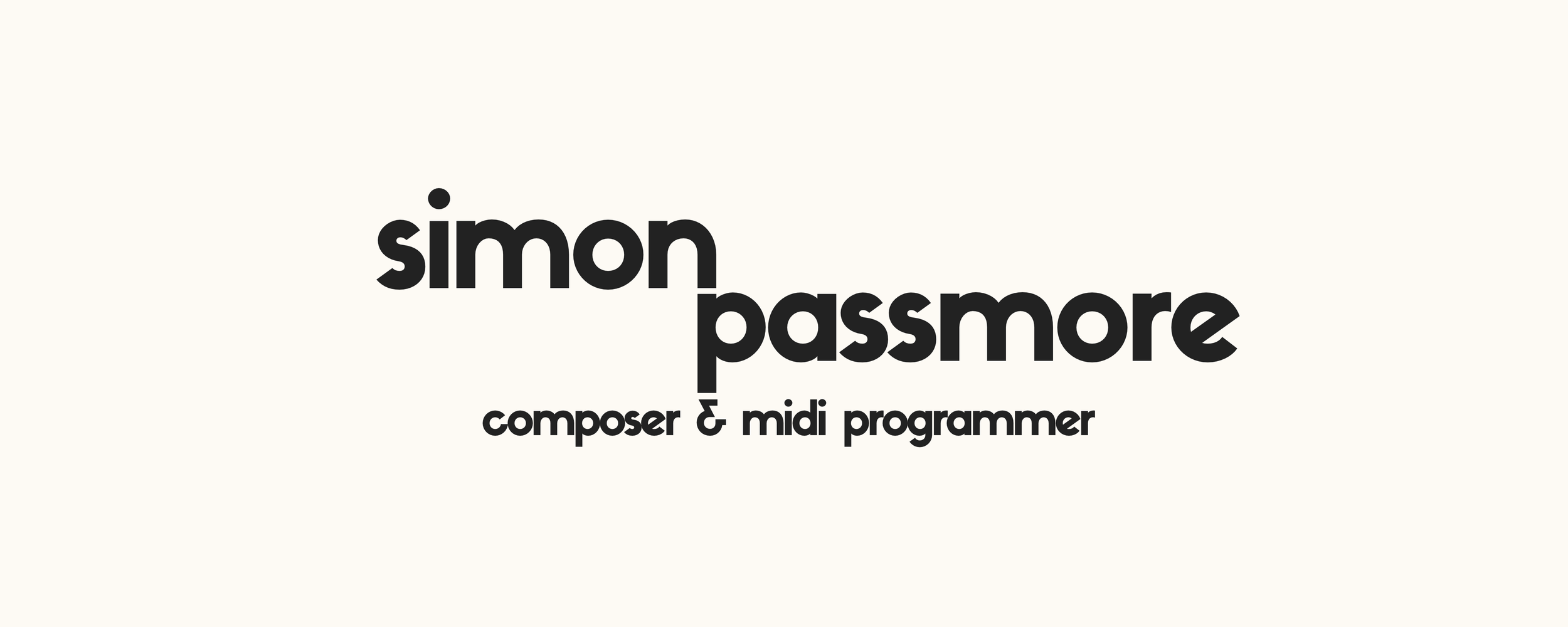
Simplified Brand & Animated Logo Inspired by the colourful note blocks inside Logic Pro, we initially tested a few AI logo ideas, which looked like nice little paintings, but completely fell apart when shrunk down for a website header or browser tab. Instead, I built a clean, simplified mark using Squarespace’s design grid, animated it in Adobe Express, and paired it with warm off-white cards and soft shadows so his artwork takes centre stage.
Google Search Recovery & Backend Handover Once the layout was ready, I unlocked the site’s search settings, wrote plain-English SEO titles and descriptions for all projects, submitted a fresh sitemap in Google Search Console, and added behind-the-scenes schema so Google could index his work properly again. Best of all, everything runs off standard Squarespace blog collections under the hood, so Simon can add new scores or YouTube demos himself in a couple of minutes without touching a line of code.
A fresh start: a one-page Squarespace website, slide-out music player, and video pop-ups for composer Simon Passmore.
Fullly Optimised & Tested to run smoothly on Mobile

WHAT Simon SAID